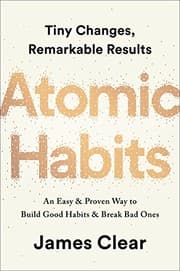
Atomic Habits
by James Clear
Synopsis
In Atomic Habits, James Clear delivers a revolutionary approach to personal transformation through the power of small, incremental changes. Drawing from cutting-edge research in psychology, neuroscience, and behavioral economics, Clear demonstrates how tiny adjustments to our daily routines can compound into remarkable results over time. The book dismantles the myth that massive changes require massive effort, instead revealing how 1% improvements can lead to extraordinary outcomes when applied consistently. Clear introduces his proven four-step system for building good habits and breaking bad ones: make it obvious, make it attractive, make it easy, and make it satisfying. Through compelling real-world examples, from Olympic athletes to successful entrepreneurs, he shows how habit stacking, environment design, and identity-based change can reshape your life. Whether you want to lose weight, increase productivity, reduce stress, or achieve any personal goal, this practical guide provides actionable strategies that work. Clear's writing is accessible yet profound, making complex behavioral science understandable for everyday application. This isn't just another self-help book filled with motivational fluff—it's a science-backed manual for sustainable change that has already transformed millions of lives worldwide.
Mood & Atmosphere
The book maintains an optimistic and empowering tone throughout, combining scientific rigor with practical accessibility. Clear's writing is engaging and motivational without being preachy, using compelling stories and clear examples that make complex behavioral science feel achievable and actionable for everyday readers.
Key Themes
The Power of Small Changes
The book emphasizes how tiny, consistent improvements compound over time to create significant transformations. Clear demonstrates that focusing on getting 1% better each day can lead to remarkable long-term results.
Identity-Based Change
Rather than focusing solely on outcomes, Clear advocates for changing your identity and becoming the type of person who embodies your desired habits. This approach creates lasting behavioral change by aligning actions with self-perception.
Environmental Design
The physical and social environments we inhabit play a crucial role in shaping our behavior. Clear shows how strategically designing your surroundings can make good habits easier and bad habits harder to maintain.
The Four Laws of Behavior Change
Clear presents a systematic framework for habit formation: make it obvious, attractive, easy, and satisfying. These laws provide a practical roadmap for building positive habits and breaking negative ones.
Systems vs. Goals
The book argues that focusing on systems and processes rather than just end goals leads to more sustainable success. Clear explains how winners and losers often have the same goals, but winners have better systems.
Discussion Questions
How does Clear's concept of 'identity-based habits' differ from traditional goal-setting approaches?▾
Identity-based habits focus on becoming the type of person you want to be rather than just achieving specific outcomes. This approach creates deeper, more sustainable change because your habits become expressions of who you are, not just things you do.
What role does environment play in habit formation according to Clear, and how can we use this knowledge?▾
Clear argues that environment is often more influential than motivation in shaping behavior. By designing our physical and social surroundings to make good habits obvious and easy while making bad habits invisible and difficult, we can dramatically improve our success rate.
Why does Clear argue that focusing on systems is more effective than focusing on goals?▾
Systems create continuous improvement and sustainable progress, while goals are temporary checkpoints that can lead to yo-yo effects. Clear shows that successful people and unsuccessful people often share similar goals, but the successful ones have better systems for consistent daily actions.
How does the concept of 'habit stacking' work, and why is it so effective?▾
Habit stacking involves linking a new habit to an existing one using the formula 'After I do X, I will do Y.' This leverages the neural pathways of established habits to make new ones more automatic and easier to remember.
What does Clear mean by 'the plateau of latent potential' and why do people give up before seeing results?▾
The plateau of latent potential describes the period where you're putting in work but not yet seeing obvious results—like an ice cube that doesn't melt until it reaches exactly 32 degrees. People give up because they expect linear progress, but breakthrough moments often come after sustained effort through seemingly unproductive periods.
How can understanding the 'Four Laws of Behavior Change' help someone break a bad habit?▾
By inverting the four laws—make it invisible, unattractive, difficult, and unsatisfying—you can systematically dismantle bad habits. This approach addresses the psychological and environmental triggers that sustain negative behaviors rather than relying solely on willpower.
Buy This Book
Want to discuss this book?
Create your free book club and start proposing, voting, and discussing books with your group.
Create a free club